Seat four · the far end, nearest the window
Sunday Wax: The Weekly Ten Minutes That Keeps a Table, and a Head, in Order
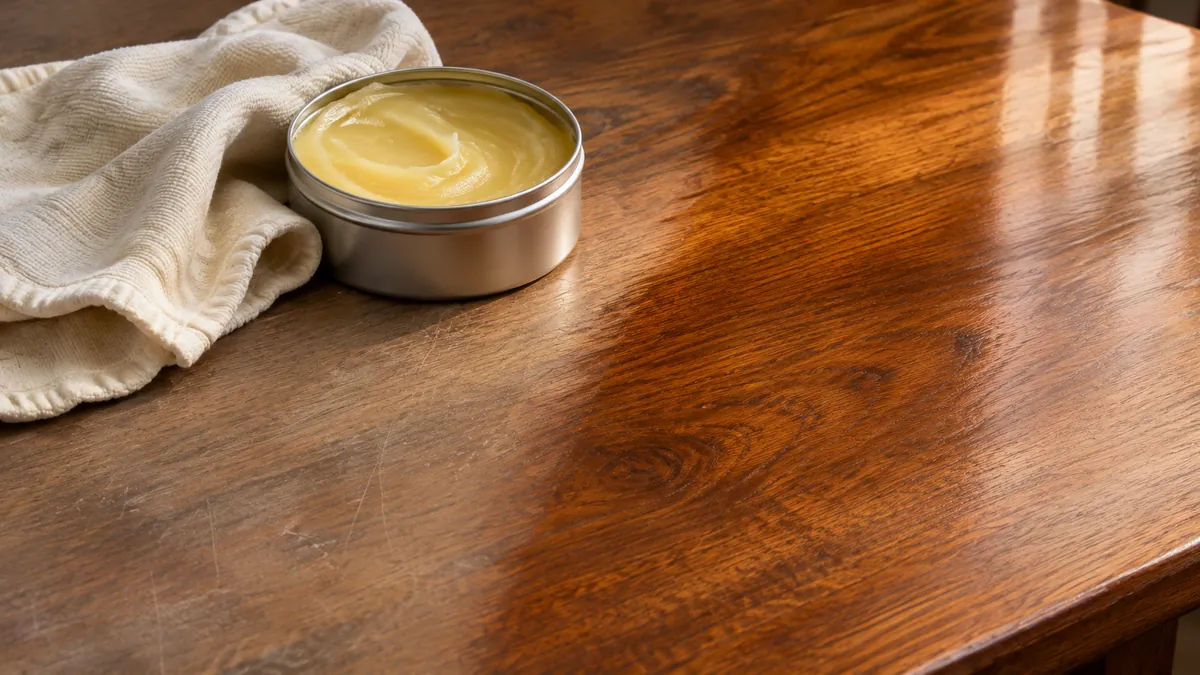
Solid wood is alive in a quiet way. It takes in moisture, gives it back, and scuffs at the places where elbows rest. A thin coat of wax once a week keeps it from drying out. Our finishers do it on Sundays, out of habit more than need.
Why a fixed day
A finisher who waxes "whenever the table needs it" waxes about twice a year, usually after a glass leaves a ring. A finisher who waxes on Sunday waxes fifty-two times. The work takes ten minutes and the table never gets to the point of needing rescue. Owners who keep the habit tell us the same thing in different words: it is less about the wax than about the moment of looking at the whole surface, end to end, and noticing what changed.
The week as a surface
A week has the same problem as a tabletop. Small marks build up where you are not looking: an appointment you meant to book, a call you said you would return, a bill that slid under a magazine. None of it is serious on Monday. By Friday, holding all of it in your head has become its own source of strain, and the strain makes it harder to concentrate on whatever is in front of you. People who write about attention often describe this as an open loop, a task the mind keeps quietly circling because it has not been parked anywhere safe. A short weekly review closes the loops by putting them on paper, which frees attention for the week ahead.
The habit, as we would set it
Pick a day and an hour and make it the same every week. Sunday afternoon works for many people, but the day matters less than its never changing.
Sit at the table, not on the couch. Bring a calendar, the pad from the drawer, and a cup of something warm. Look back first: what happened, what was promised, what is still open. Write each open item down in a few words.
Then look ahead. Put the week's appointments where you will see them every morning, and choose the three things that matter most. Only three. A longer list turns into a new source of the same strain you sat down to relieve.
Finish with one line about something good from the week just ended. It seems minor. Over months, the lines become a record you can read back, and it is surprising how much they help you place events in time. When did the grandson start school, when did the leak get fixed: it is all there in your own handwriting.
Sleep and the open loop
Some people find that the review helps their nights as much as their days, because fewer loops follow them to bed. We would not promise that, and if sleep has been poor for weeks it deserves more than a notebook. But it costs nothing to try, and the table gets waxed in the same ten minutes.
A note from the bench
Wax goes on thin and comes off almost completely. Most of the shine comes from buffing, not from the wax itself. The same is true of the weekly sit-down: the writing is quick, and the value is in looking.